
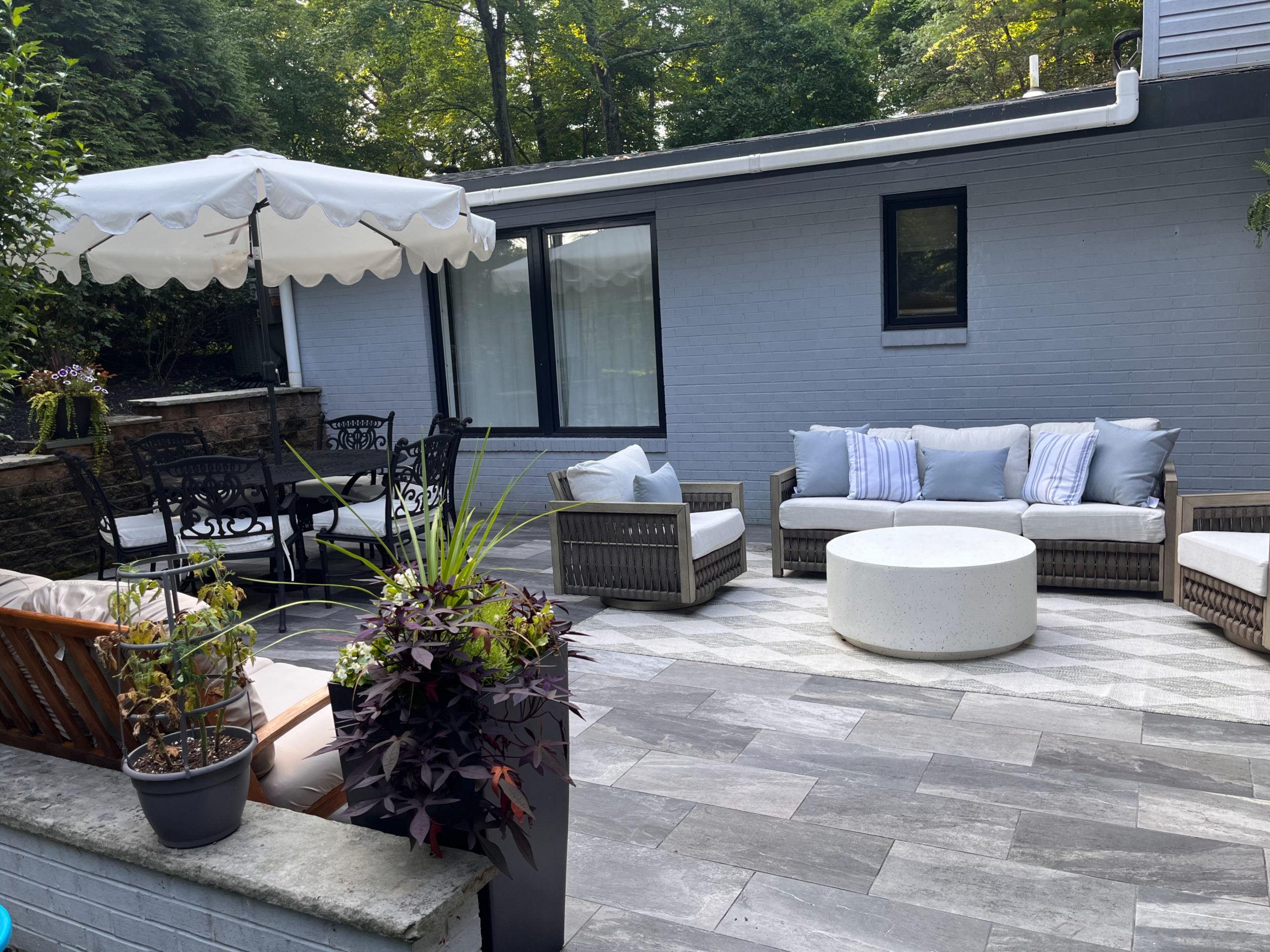
The best backyard designs begin with a clear understanding of how the space needs to function. For Lauren and her family, that meant creating two distinct outdoor zones: a comfortable lounge for quiet mornings and casual conversation, plus a dining area for grilling and entertaining friends.
The existing patio offered nearly 500 square feet of usable hardscape, but its mismatched furniture made the space feel more temporary than intentional. Lauren also needed the design to work for her husband, toddler, new baby, and two dogs, all while balancing durability with a budget of $6,000 at the mid-point.
Working with Seeded designer Allison, Lauren transformed the patio through a collaborative online outdoor design process. A calm palette of cool neutrals and soft blues now connects the lounge and dining areas, while outdoor rugs, generous seating, shade, and low-maintenance materials make the backyard more comfortable for everyday family life.
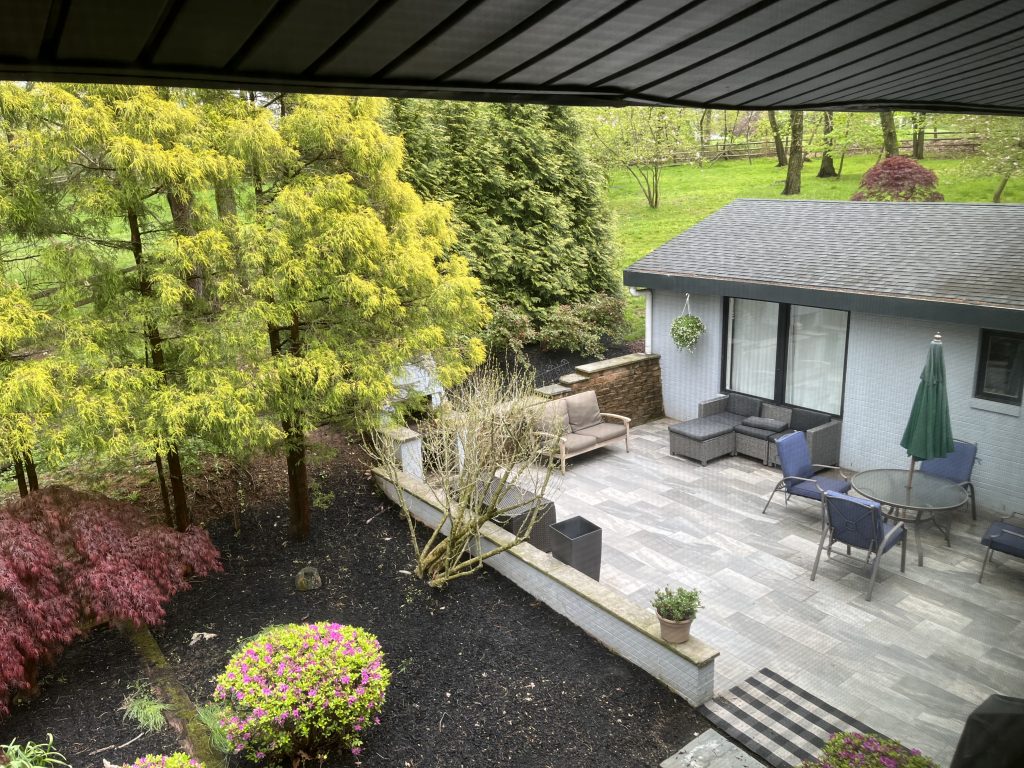
What Changed?
The backyard makeover:
- Created separate lounge and dining zones
- Replaced mismatched seating with a coordinated outdoor furniture arrangement
- Added comfortable seating for family and guests
- Introduced two outdoor rugs to define each zone
- Added shade over both the dining and lounge areas
- Preserved a direct path between the sliding doors and grill
- Retained the unused fireplace as a focal point for herbs and climbing plants
- Used durable, lower-maintenance materials suited to family life
- Connected the cool gray patio and house exterior with soft blues and neutrals
How Do You Design One Patio for Dining and Relaxing?
A patio can support multiple activities when each function has its own clearly defined zone and the paths between them remain open.
Lauren wanted a dining area for meals and entertaining, but she also imagined quieter moments outdoors, especially morning coffee and time with her growing family. The challenge was fitting both functions onto one rectangular patio without making it feel crowded.
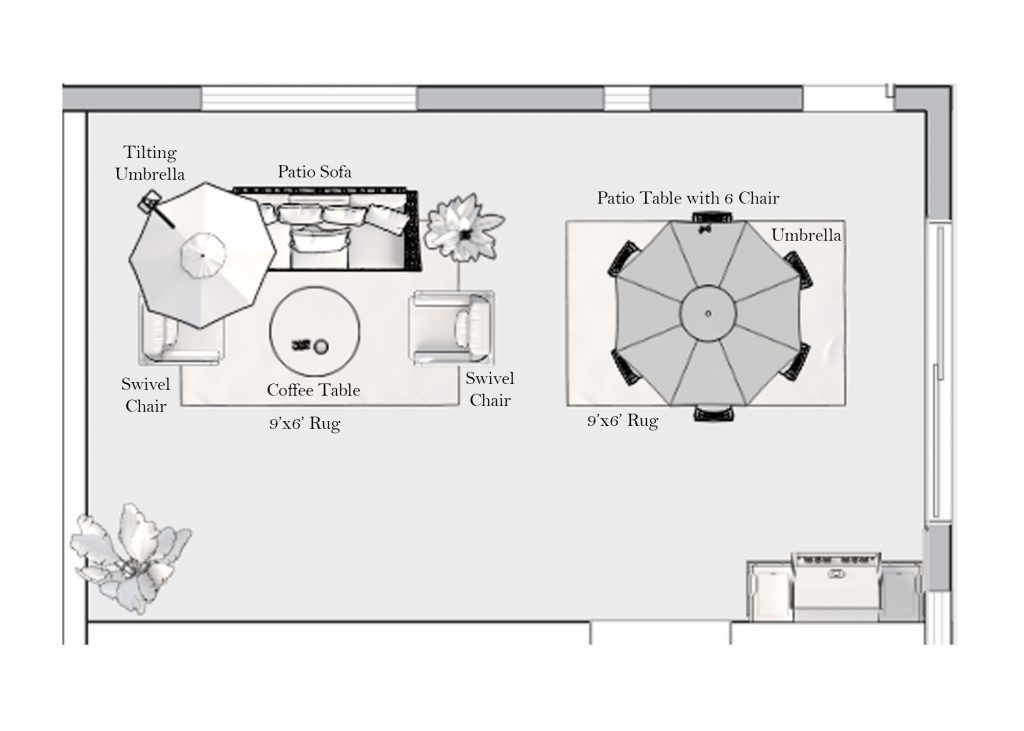
Allison divided the space lengthwise. The lounge was placed along the house, where a sofa and two generous chairs create a comfortable outdoor living room. The dining area was positioned closer to the existing fireplace and garden wall, giving it a more enclosed, destination-like feeling.
This arrangement also protected the most important circulation route. The grill remained near the sliding doors, as Lauren requested, so food could move easily between the kitchen, grill, and dining table.
How Did the Idea Board Establish the Backyard’s Style?
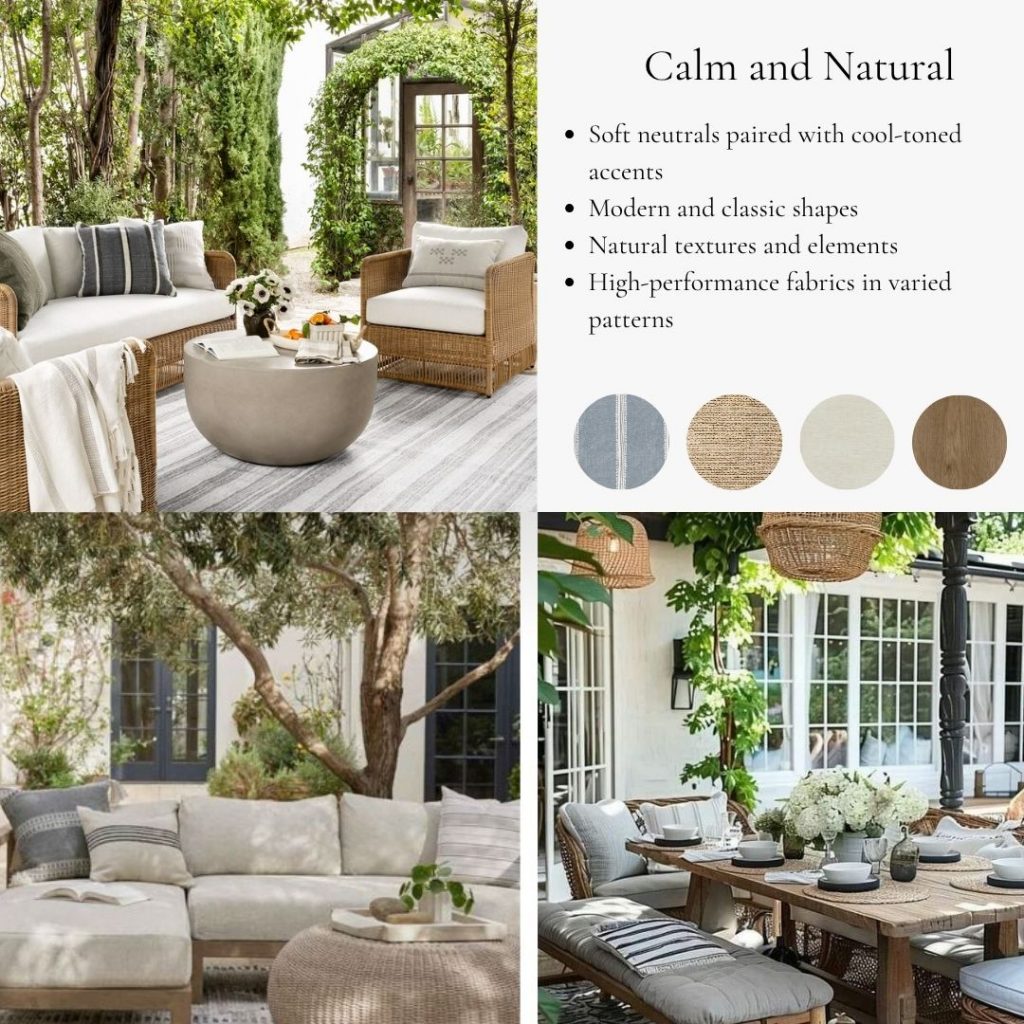
An idea board helps define the atmosphere of a space before individual products are selected.
Allison’s initial “Calm and Natural” direction combined:
- Soft neutral upholstery
- Cool blue and gray accents
- Natural textures
- Classic and modern furniture shapes
- Outdoor performance fabrics
- Woven materials
- Subtle patterns
- Wood-inspired finishes
The palette made sense alongside the home’s white and cool gray exterior, black window frames, gray pavers, and surrounding greenery.
Lauren responded positively to the neutral textiles and cool-toned accents, but she questioned whether the warm wood tones shown in the inspiration images would feel disconnected from the patio’s angular architecture and gray-blue finishes.
Rather than dismissing the concern, Allison explained that cooler, weathered wood tones could introduce warmth without competing with the existing materials. They agreed to test the combination in the concept stage, where Lauren could see complete furniture groupings instead of isolated inspiration images.
This is one of the main advantages of virtual outdoor design. Homeowners can explore a material or color they may not have chosen independently, then evaluate it in context before committing.
How Did the Concept Adapt to a Secondhand Furniture Find?
A successful professional outdoor designer does not require every item to come from a predetermined shopping list. The design should be flexible enough to incorporate worthwhile pieces the homeowner finds along the way.
After reviewing the initial concepts, Lauren found a 60-inch round cast-aluminum dining set through Facebook Marketplace. It was a departure from the wood dining table originally considered, but it offered several practical advantages:
- Seating for six
- Lower maintenance than unfinished wood
- Strong durability for frequent family use
- A dark finish that coordinated with the black window frames
- A round shape that softened the patio’s straight architectural lines
Lauren selected Concept Two as her preferred direction, and Allison revised the design around the secondhand table rather than asking her to abandon a practical purchase. The umbrella placement was also updated after Lauren confirmed that the table had a center opening.
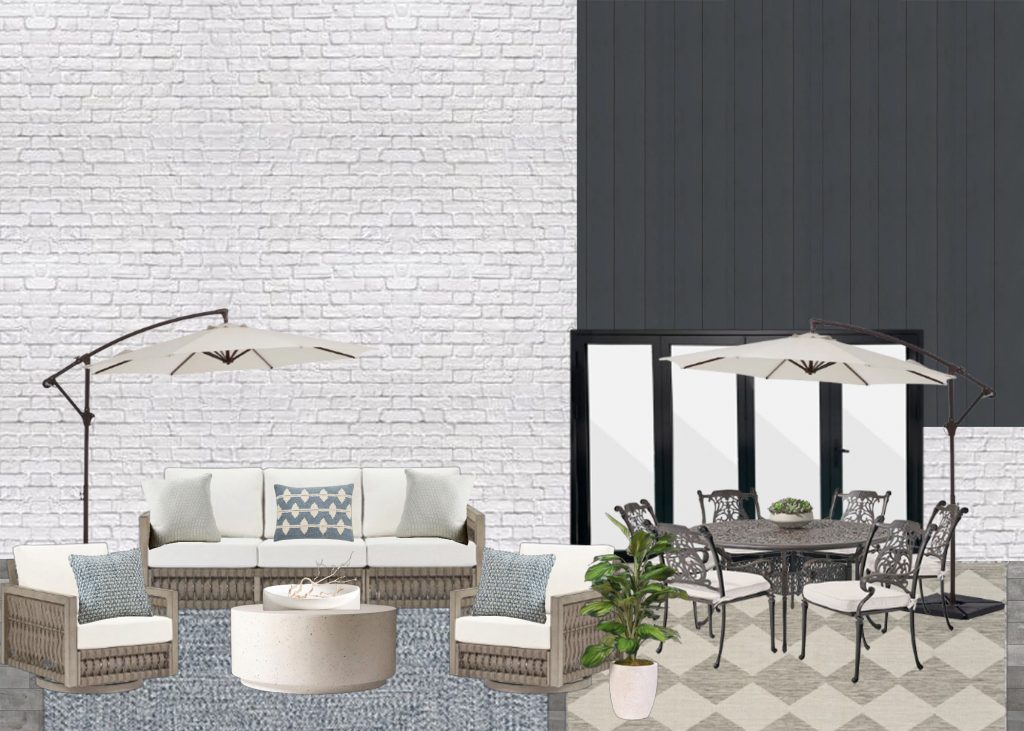
That adjustment helped preserve more of the budget for the lounge furniture, coffee table, rugs, and accessories.
Why These Outdoor Materials Made Sense
| Material or feature | Why it worked |
|---|---|
| Cast-aluminum dining set | Durable, relatively lightweight, rust-resistant, and lower maintenance than many wood options |
| Woven outdoor sofa and chairs | Added natural texture without introducing strong orange or red undertones |
| Light performance cushions | Created a calm look while remaining removable and easier to maintain |
| Blue and striped pillows | Connected the furniture to the cool gray patio and exterior |
| Fiberstone coffee table | Added a sculptural, substantial centerpiece without visual clutter |
| Outdoor rugs | Defined each activity zone and softened the large expanse of hard paving |
| Umbrellas | Delivered flexible shade without requiring permanent construction |
What Did the 3D Backyard Design Help Confirm?
A 3D patio planner is most useful for checking proportion, spacing, and circulation before furniture is ordered.
In the photorealistic 3D design, Lauren could see how the lounge furniture would relate to the house, windows, dining table, grill, and patio boundaries. The visualization confirmed that the larger sofa and lounge chairs would fit without blocking the main walkway.
It also showed why two rugs were more effective than one oversized rug. Each rug anchored a specific function:
- A blue-gray rug grounded the sofa, chairs, and round coffee table.
- A light geometric rug defined the dining table and six chairs.
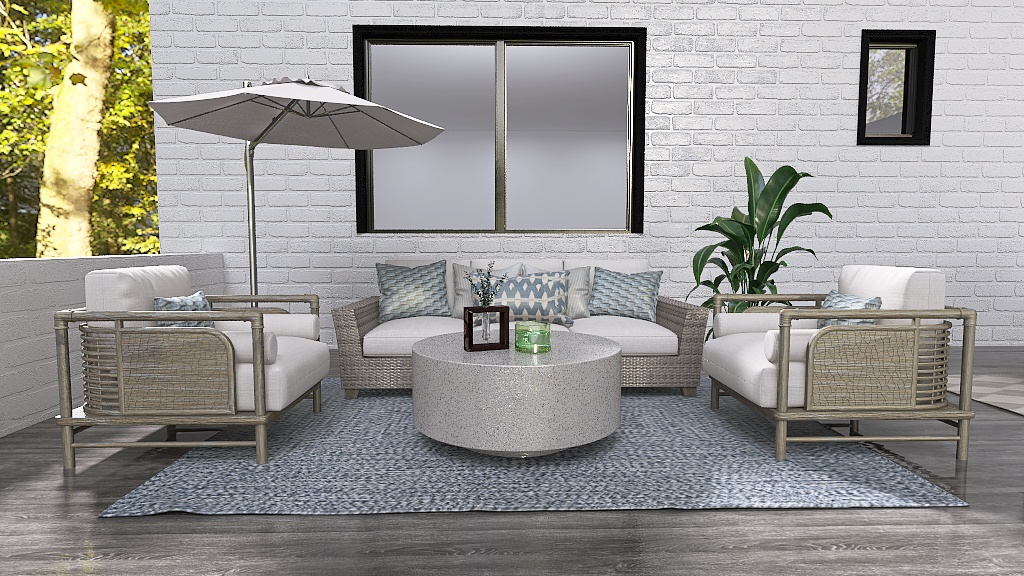
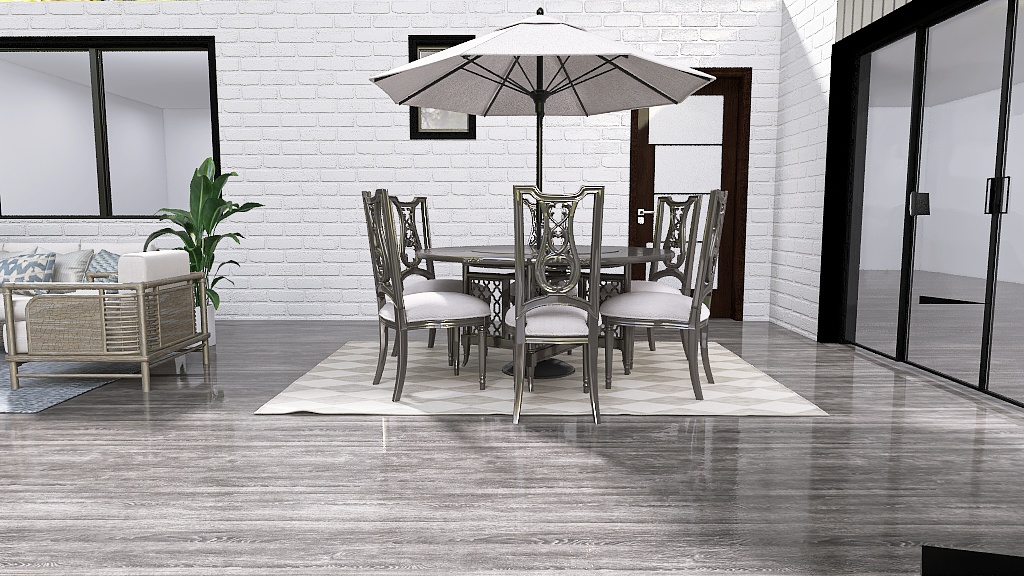
The visualization also helped Lauren understand how the natural-toned lounge frames would work against the cool architecture. Rather than reading as warm or rustic, the weathered finish softened the gray paving and prevented the space from feeling overly monochromatic.
Why Does the Finished Backyard Feel More Cohesive?
The finished patio works because the two zones are coordinated without being identical.
In the lounge area, a three-seat outdoor sofa and two deep chairs form a complete conversation group around a round white coffee table. Pale blue pillows and blue-striped accents introduce color without overwhelming the quiet palette.
The geometric outdoor rug creates a visual boundary under the furniture. It also makes the seating area feel more like an outdoor living room than a collection of patio pieces placed against a wall.
At the opposite end of the patio, the dark cast-aluminum dining set relates to the home’s black trim. A white umbrella lightens the composition and creates shade for meals. The existing fireplace remains visible and continues its new role as a planted focal point rather than an unused architectural feature.
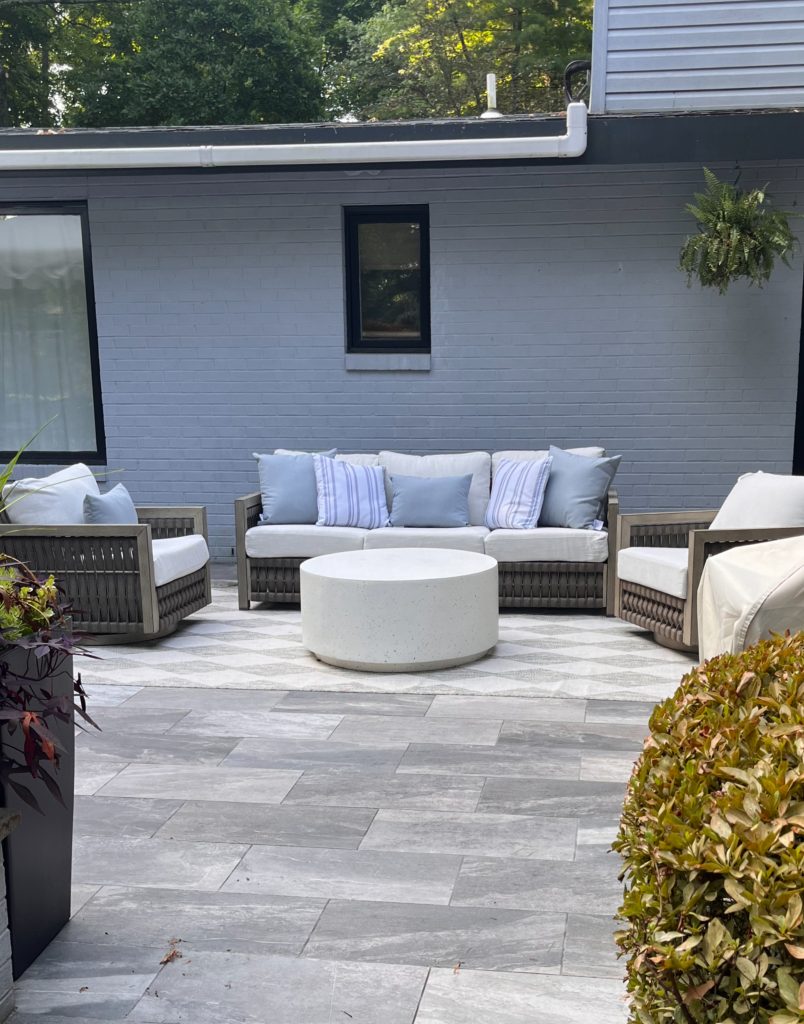
Lauren later described the finished patio as “such a relaxing outdoor space to spend time,” confirming that the design improved more than its appearance. It changed how comfortably the family could use the backyard.
Why This Backyard Design Works
Several design principles make the transformation successful.
The layout reflects real routines
The grill stayed near the sliding doors, dining remained nearby, and the lounge became a separate destination for relaxing.
The furniture is appropriately scaled
The patio is large enough to support substantial seating, but each grouping remains compact enough to preserve open walking space.
Repeated colors connect the zones
White, gray, blue, black, and weathered natural finishes appear throughout the patio, creating continuity between furniture from different sources.
Curves soften the architecture
The round dining table, umbrella, and coffee table balance the long patio, rectangular pavers, brick walls, and linear windows.
Comfort was treated as essential
Deep cushions, shade, outdoor rugs, and multiple types of seating make the patio inviting for longer periods of use.
The design allows family life to happen
Nothing feels too delicate or formal. The furniture arrangement can support children, pets, guests, casual meals, and everyday outdoor time.
Outdoor Design Tips Inspired by This Project
- Define the patio’s activities before shopping. Decide where dining, relaxing, grilling, and play will happen.
- Preserve the busiest path. Keep a clear route between the house, grill, yard, and dining area.
- Use an outdoor rug for each major zone. Rugs help large patios feel organized and intentional.
- Repeat two or three colors throughout the space. Lauren’s blues, grays, whites, and dark accents visually connect separate furniture groups.
- Choose materials according to maintenance tolerance. Cast aluminum can be a practical alternative for homeowners who do not want to maintain outdoor wood.
- Invest in the pieces that affect comfort most. Seating depth, cushion quality, and shade often matter more than decorative accessories.
- Mix new and secondhand furniture strategically. A durable marketplace find can reduce the project budget when its size and finish support the larger plan.
- Introduce curves into a highly angular patio. Round tables and umbrellas can visually soften rectangular architecture.
- Keep useful existing features. A nonfunctional fireplace can become a planter, herb station, or garden focal point.
- Preview the full arrangement before purchasing. A 3D backyard design can reveal crowding, awkward paths, or incorrect furniture scale early.
Frequently Asked Questions
How do I create separate dining and lounge zones on a patio?
Place each furniture group around its own focal point and rug. Keep a clear walkway between the zones and position dining close to the kitchen or grill whenever possible.
What outdoor furniture lasts the longest?
Teak, high-quality aluminum, powder-coated steel, all-weather wicker, and certain composite materials can perform well outdoors. Longevity also depends on climate, construction quality, covers, drainage, cushion storage, and regular maintenance.
Is cast-aluminum furniture good for a family patio?
Cast aluminum is often well suited to family spaces because it is durable, relatively easy to clean, and less prone to rust than untreated steel. It can also provide decorative detailing without the maintenance associated with some wood furniture.
How large should an outdoor rug be?
The rug should visually connect the furniture. In a lounge area, at least the front legs of the sofa and chairs should rest on it. Under a dining table, the rug should extend far enough for chairs to remain on the rug when pulled out.
Can I use light-colored cushions with children and dogs?
Yes, but removable covers and outdoor performance fabrics are important. Look for fabrics designed to resist moisture, fading, and stains, and follow the manufacturer’s cleaning instructions.
Can AI help design my backyard?
AI backyard design tools can help organize preferences, explore styles, and visualize alternatives. A human designer remains valuable for validating dimensions, furniture scale, material suitability, traffic flow, and the practical details of installation.
How does online outdoor design work?
A typical online outdoor design process includes a project questionnaire, photos and measurements, an inspiration or idea board, detailed concept boards, revisions, a 3D patio design, a floor plan, and a curated shopping list.
Do I need a landscape architect or an outdoor designer?
An outdoor designer is generally appropriate for furniture layouts, décor, rugs, shade, planters, and cosmetic updates. A landscape architect or qualified contractor may be needed for grading, drainage, retaining walls, structural construction, electrical work, major planting plans, or permitting.
How much does a backyard furniture makeover cost?
The cost varies by patio size, seating capacity, materials, and the number of zones. Lauren planned for $3,000 to $10,000 and prioritized lower-cost solutions while remaining open to spending more on comfort and durability.
Can an outdoor designer work with furniture I already own?
Yes. Existing, inherited, or secondhand pieces can be incorporated when their measurements, materials, and condition support the final layout. Lauren’s dining set became a central part of the revised concept and 3D design.
Lauren did not need to rebuild her patio to change the way it felt. The transformation came from a clearer layout, comfortable furniture, coordinated materials, thoughtful shade, and a design process that adapted to real-life discoveries along the way.
A Backyard That Now Feels Like Part of the Home
The result is calm without feeling formal, family-friendly without looking unfinished, and flexible enough for coffee in the morning, dinner outside, or an afternoon with children, dogs, and friends.
For homeowners looking at a mismatched patio and struggling to imagine how it could come together, this project shows the value of seeing the complete outdoor living design before buying each individual piece.