
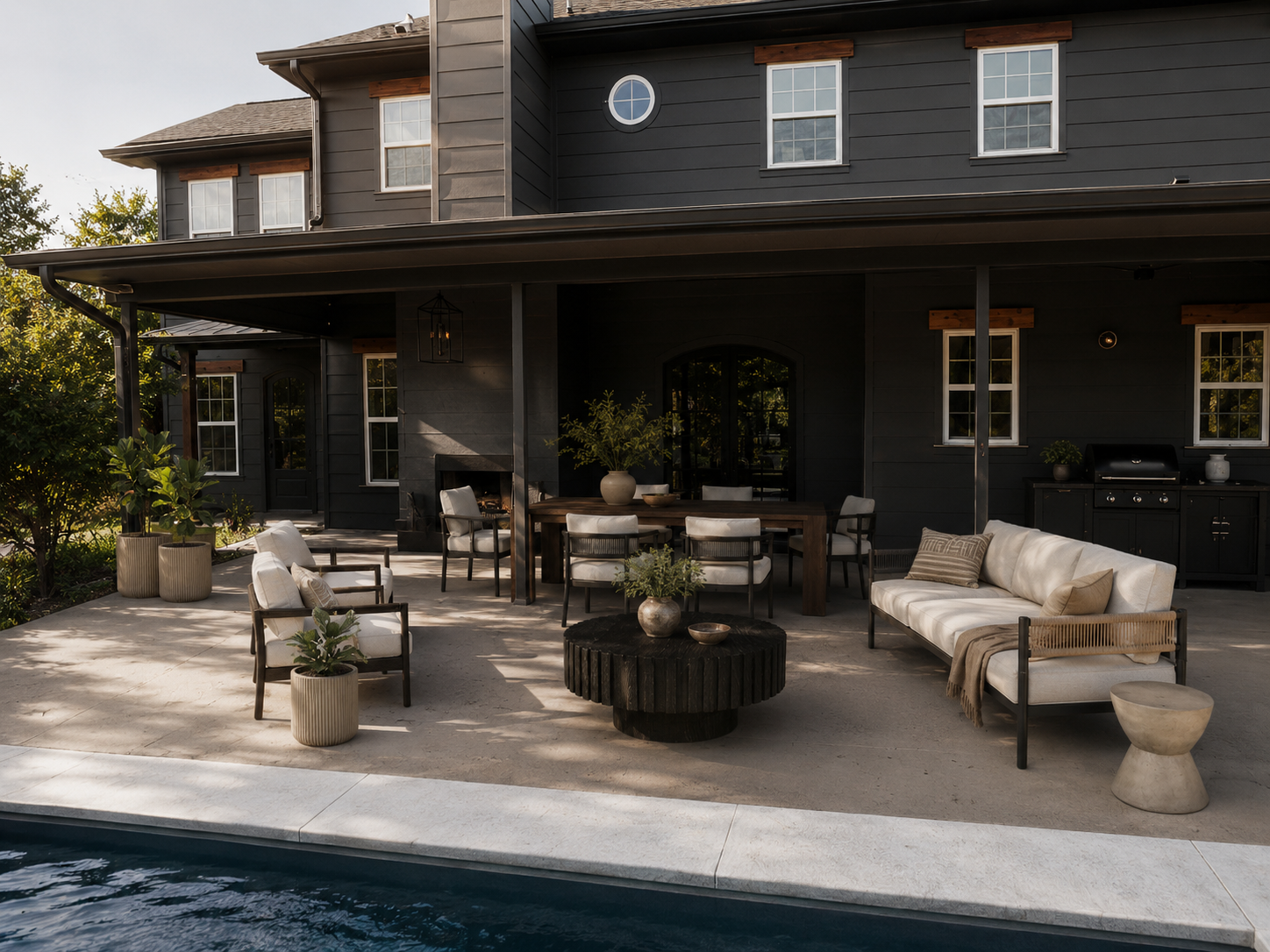
A successful outdoor living design begins by assigning each part of the space a purpose. For Emily’s covered backyard patio in Texas, that meant finding room for grilling, eating, lounging, and gathering by the existing fireplace without crowding a long, relatively narrow footprint beside the pool. The patio had substantial hardscape, a protective roof, a grill, and a view of the trees, but almost no furniture and no clear outdoor furniture layout. Working with Seeded designer Cristina, Emily developed a warm contemporary plan that divided the patio into connected dining, lounge, and cooking zones. Warm wood, dark frames, pale performance upholstery, sculptural planters, and photorealistic 3D previews transformed the underused area into a cohesive plan for everyday relaxation and larger parties.
Texas summers make shade, fade resistance, and heat-conscious materials important considerations for outdoor furniture. The covered structure provides valuable protection, while pieces near the patio’s outer edge still need to withstand strong sun, moisture, and changing weather.
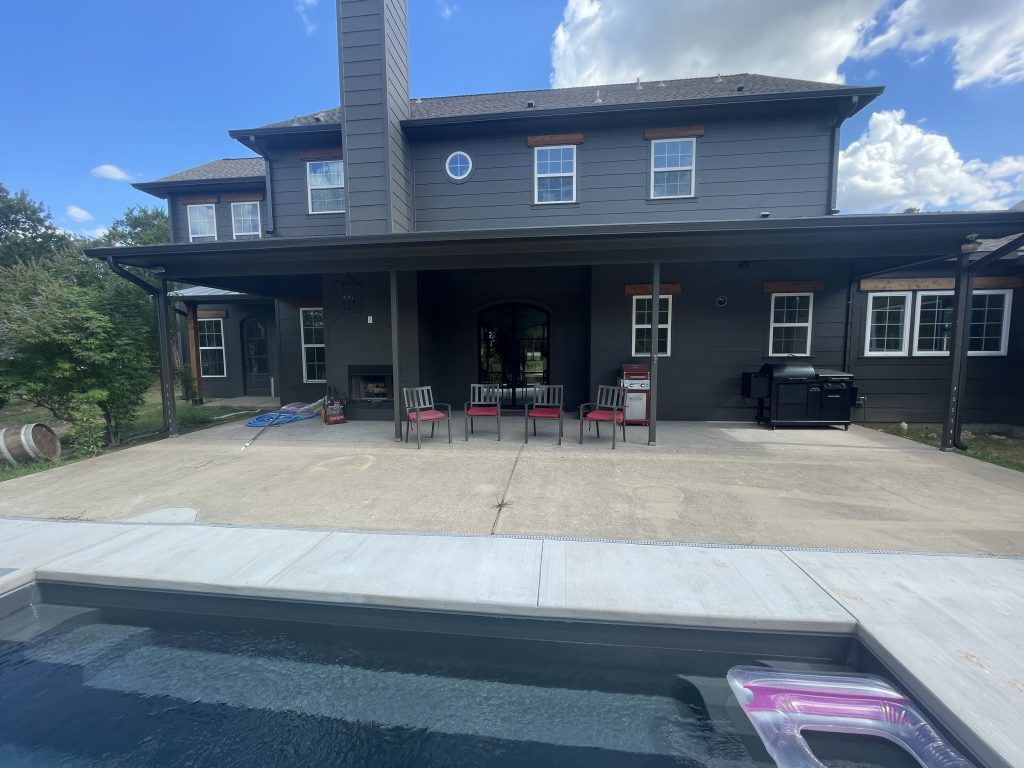
What Changed?
- Organized the patio into lounge, dining, and grilling zones
- Replaced scattered chairs with coordinated, full-size seating
- Used a sofa and movable lounge chairs instead of a bulky sectional
- Preserved an open path along the pool
- Incorporated the existing grill and outdoor fireplace
- Added a substantial dining table for parties
- Balanced the dark house exterior with light upholstery and warm wood
- Introduced grouped planters without blocking the view of the trees
- Used a round coffee table to improve movement through the lounge
- Previewed scale and spacing through a 3D backyard design
How Do You Arrange Furniture on a Long, Narrow Patio?
The best layout for a long, narrow patio divides the length into activity zones while preserving one continuous circulation path. Trying to make every function happen in the center usually creates congestion, especially when a pool edge, doorway, grill, or fireplace also needs to remain accessible.
Emily’s patio already had strong architectural anchors. The grill occupied one end, the outdoor fireplace sat closer to the center, and doors connected the patio to the house. Cristina used those fixed elements to establish three related zones:
- A cooking zone around the existing grill, visually strengthened with dark storage and prep surfaces.
- A dining zone beneath the covered portion of the patio, positioned close enough to the grill for serving.
- A lounge zone along the pool, furnished with a sofa, two chairs, and a round coffee table.
The sofa-and-chairs arrangement was more adaptable than a sectional. A sectional can consume valuable corners and create a visual barrier across a narrow patio. Separate chairs can be angled toward conversation, moved closer to the fireplace, or repositioned when more guests arrive.
The round coffee table was another practical choice. Its curved perimeter offers more forgiving circulation than a large rectangular table, particularly near the pool edge.
How Did the Outdoor Design Direction Take Shape?
Online outdoor design works best as a sequence of decisions, beginning with atmosphere and progressing toward individual products, spacing, and implementation. Emily and Cristina moved through three stages: Idea Board, Concept Board, and 3D visualization.
The Idea Board: Defining “Warm Contemporary”
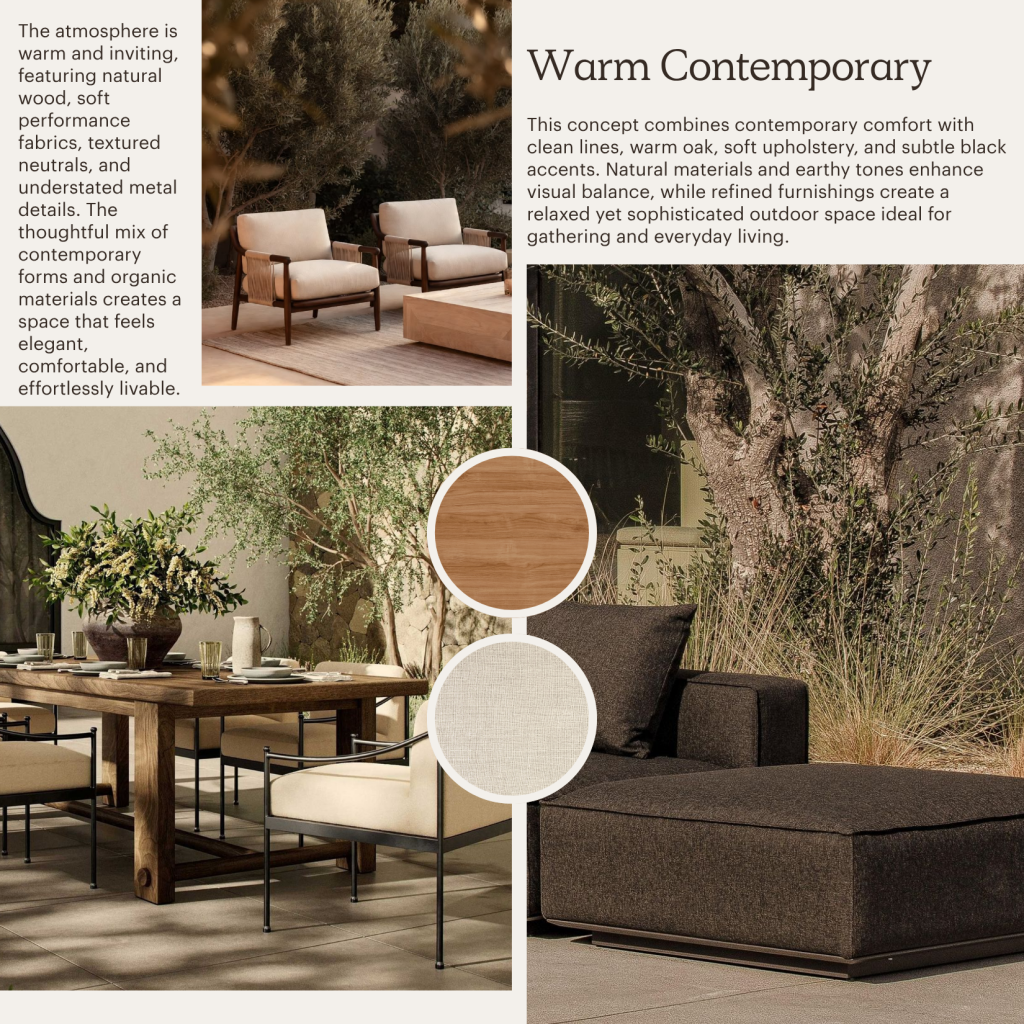
An Idea Board establishes the visual language before the designer selects a complete furniture scheme. Emily described her preferred style as transitional, moody, and equestrian, with a Texas feeling that did not become overly cowboy-themed.
Cristina translated that brief into a Warm Contemporary direction. Inspiration imagery paired clean furniture lines with natural wood, soft neutral upholstery, earthy landscaping, and understated dark metal. The combination felt appropriate beside the home’s charcoal exterior while still creating contrast.
The direction also related subtly to Emily’s interiors, which include Sherwin-Williams Rosemary in the kitchen and Sherwin-Williams Egret on the walls. Instead of repeating those colors literally, the outdoor palette drew from their broader relationship: deep, grounded tones balanced by warm off-whites.
The Concept Board: Choosing the Furniture Language
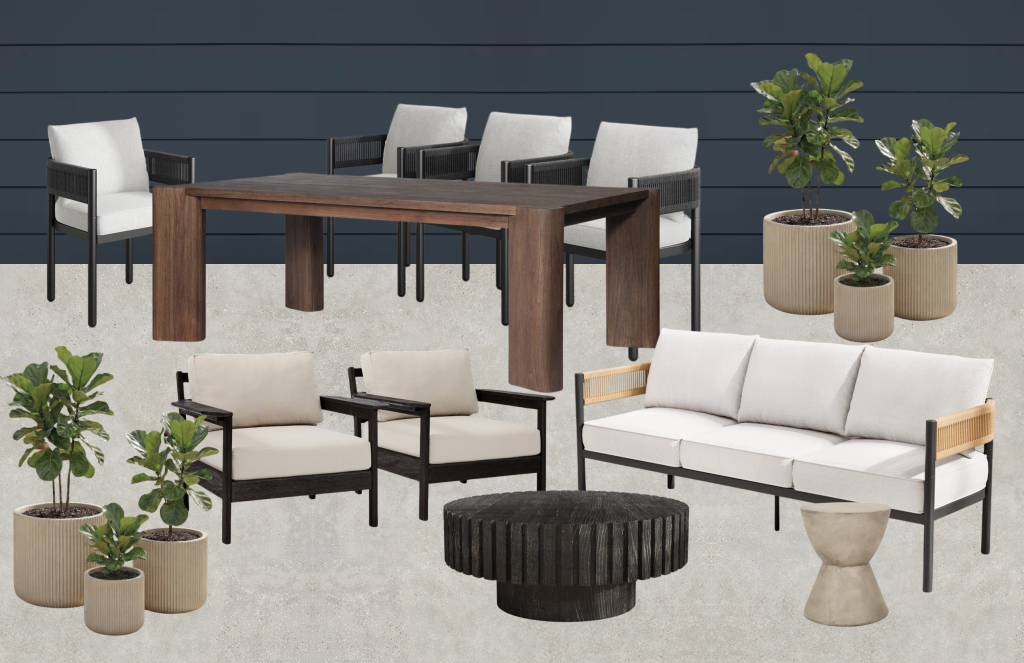
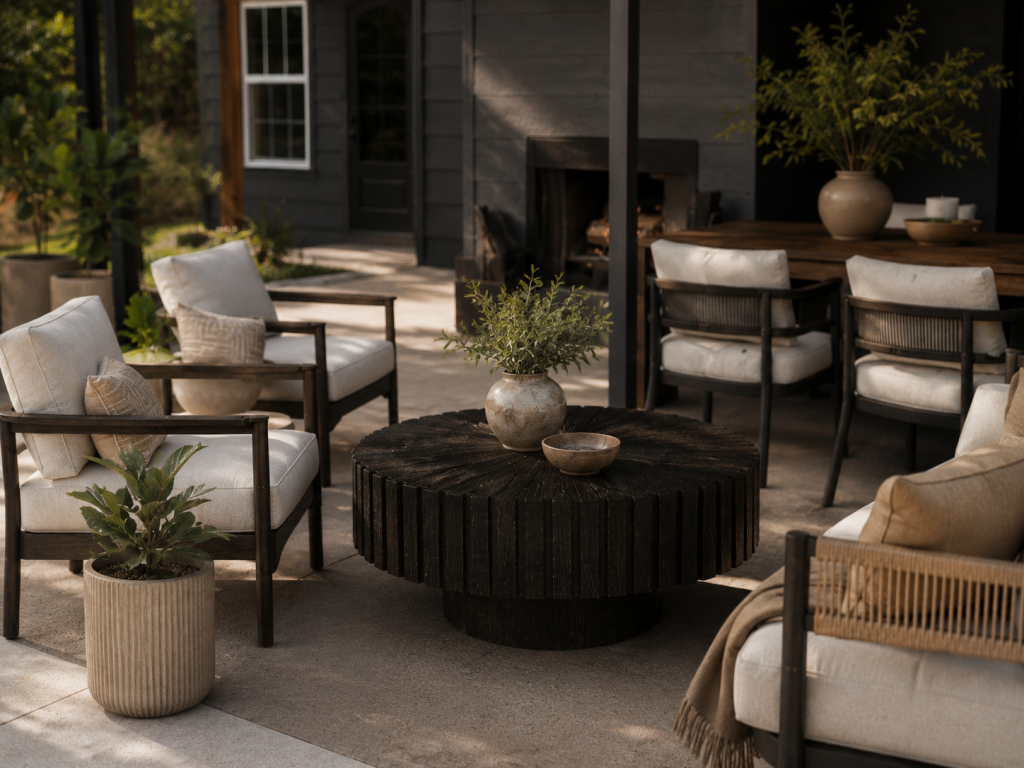
A Concept Board turns atmosphere into a coordinated family of furnishings. Cristina proposed a substantial warm wood dining table, dark-framed dining chairs with pale cushions, a light upholstered sofa, two lounge chairs, a round black coffee table, a small sculptural side table, and ribbed neutral planters.
The furniture is coordinated without becoming a matching set. Dark frames repeat the house color and grill finish. Warm wood introduces an organic note. Light upholstery brightens the deeply shaded covered patio, while woven details keep the composition relaxed.
Grouped planters soften the broad concrete surface and add height at the patio edges. Importantly, they do not form a solid privacy wall. Emily identified the view of the trees as one of the things she already liked, so the design frames that view rather than screening it.
The 3D Visualization: Testing Scale Before Purchasing
A 3D patio planner is most useful when it answers spatial questions that a mood board cannot. Will the dining chairs pull out comfortably? Is the sofa too deep? Can people move between the lounge and the pool? Does the grill remain usable during a party?
The photorealistic render placed the proposed furniture against Emily’s actual architecture. It showed the relationship between the dining table, grill, fireplace, doors, support columns, lounge seating, and pool edge. This allowed the design to be evaluated as a working outdoor room, not simply a collection of attractive products.
Seeded’s process combines AI-assisted personalization and visualization with Cristina’s judgment as a professional outdoor designer. The final shopping plan can draw from multiple retailers rather than requiring every item to come from one brand, while collaborative revisions allow the layout or products to be adjusted before purchasing.
How Do You Create a Texas-Inspired Patio Without Themed Decor?
A regional design feels more enduring when it relies on color, material, and atmosphere rather than literal symbols. For Emily, the Texas influence appears through dark, sun-warmed wood, substantial furniture forms, blackened finishes, earthy vessels, and relaxed neutral textiles.
The result suggests a refined ranch or equestrian sensibility without relying on horseshoes, stars, cowhide, or novelty signs. Even Emily’s requested “Texas touches” can eventually be added through restraint, perhaps with handmade pottery, locally inspired botanical art, or one vintage object rather than a collection of motifs.
The palette also works because it responds to the house:
- Charcoal and matte black connect the furniture to the siding and grill.
- Cream upholstery lifts the shaded patio.
- Warm brown wood softens the black exterior.
- Taupe and stone relate to the concrete hardscape.
- Greenery connects the covered area to the surrounding trees.
What Outdoor Materials Make Sense in a Hot, Sunny Climate?
Outdoor materials should be selected for exposure, maintenance, and comfort, not appearance alone. Emily specifically requested fabric that would resist fading in the sun, an important consideration for a Texas backyard. For implementation, the light cushions should use solution-dyed performance fabric or an equivalent outdoor-rated textile.
| Material | Best quality | Consideration |
|---|---|---|
| Powder-coated aluminum | Lightweight, rust resistant, and easy to move | Dark finishes can become hot in direct sun |
| Powder-coated steel | Strong and visually slim | Scratches should be repaired to limit corrosion |
| Teak | Naturally durable and resistant to decay | Requires cleaning and optional oiling if the original color is preferred |
| Solution-dyed acrylic | Strong fade and weather resistance | Cushion construction and drying also matter |
Teak is widely regarded as highly durable against decay, making it a practical reference point for outdoor wood furniture. The Wood Database teak guide.
Because this patio is covered, it already benefits from a valuable shade solution. The roof reduces direct exposure and makes pale upholstery more practical, but pieces near the outer edge will still encounter sun, wind-driven rain, pool water, and airborne debris.
Why Does This Backyard Design Work?
This patio works because every choice solves both a visual and functional problem.
The dining table gives larger gatherings a clear destination. The lounge supports conversation without closing off the pool. The grill remains a priority rather than an appliance squeezed behind furniture. The existing fireplace adds atmosphere without requiring a separate fire table in the main circulation zone.
Repeating dark frames, warm wood, and pale cushions across both dining and lounge furniture creates cohesion. At the same time, variations in woven details, silhouettes, and table shapes keep the patio from looking like a showroom set.
Most importantly, the plan respects what was already successful. The roof, fireplace, pool, grill, dark architecture, and view of the trees became the framework for the design. The project is a furniture-focused online outdoor design, not a full landscape or construction plan, which allows the transformation to concentrate resources on how the patio will actually be used.
Outdoor Design Tips Inspired by This Project
- Define activities before selecting furniture. List dining, cooking, lounging, fire, pool, and play needs first.
- Zone long patios by function. Arrange activities along the length instead of crowding everything into the middle.
- Protect one continuous walkway. Connect doors, the grill, pool, and yard without weaving through furniture.
- Choose movable chairs for flexibility. They can support conversation, dining overflow, or fire pit seating.
- Use rounded tables in tight circulation areas. Curves reduce sharp corners near primary paths.
- Verify performance fabric specifications. Look for fade, moisture, mildew, and cleaning information.
- Repeat a limited material palette. Two or three recurring finishes make separate zones feel connected.
- Use planters to soften hardscape. Cluster varied heights, and consider native plants suited to local exposure.
- Invest in shade before decorative accessories. A roof, pergola, or umbrella can determine how often the space is used.
- Preview the full layout in 3D. Confirm furniture scale, chair clearance, and circulation before ordering.
Frequently Asked Questions
How do I design an outdoor living room?
Start with a conversation group rather than individual furniture pieces. A sofa and two chairs around a coffee table usually create a clearer social zone than chairs lined against a wall.
Can AI help design my backyard?
AI backyard design can help organize preferences, explore styles, and generate visual possibilities. For a buildable furniture plan, combine AI-assisted tools with a human designer who can evaluate dimensions, circulation, materials, budget, and the property’s existing conditions.
What outdoor furniture lasts the longest?
Teak, powder-coated aluminum, properly finished steel, and high-quality synthetic weaves are common durable choices. Longevity also depends on joinery, hardware, cushion construction, exposure, covers, and routine maintenance.
Should I choose teak or aluminum furniture?
Choose teak for natural warmth, weight, and graceful weathering. Choose aluminum when you want lighter furniture, minimal upkeep, and resistance to rust. Both can work well when the product is designed and finished for outdoor use.
How much does a backyard or patio design cost?
Cost depends on whether the project involves furniture only or construction, landscaping, utilities, and custom features. Emily’s furniture-focused budget was $4,000 to $6,000, with flexibility. A phased plan can prioritize seating and dining first, then add planters, lighting, storage, or cabinetry.
What size outdoor rug should I buy?
Choose a rug large enough for at least the front legs of all lounge seating to rest on it. Under a dining table, it should extend far enough for chairs to remain on the rug when pulled out. An outdoor rug is optional on attractive hardscape and may be omitted to simplify poolside cleaning.
How do I create privacy without blocking the view?
Place tall planters or open-canopy plants where screening is needed, rather than building one continuous hedge. This preserves sightlines while reducing exposure from specific angles.
Can I keep my existing grill, fireplace, or furniture?
Yes. An effective patio makeover begins by measuring and evaluating what is already present. Existing elements can become anchors for the new zones, as the grill and fireplace did in Emily’s design.
Do I need a landscape architect or an outdoor designer?
Choose an outdoor designer for furniture layouts, styling, product selection, color, and 3D patio visualization. Consult a licensed landscape architect, engineer, or qualified contractor when the project involves grading, drainage, retaining walls, structural construction, utilities, or permit-sensitive work.
For any outdoor fireplace or fire pit, follow the appliance instructions and local requirements. The National Fire Protection Association also recommends supervision and a three-foot safety zone around outdoor fires. NFPA outdoor fire safety reference.
From Underused Patio to Purposeful Outdoor Room
Emily’s project shows that a backyard makeover does not always require new hardscape or elaborate landscaping. Sometimes the most significant change comes from assigning each area a job, choosing furniture at the right scale, and connecting the palette to the home.
The final 3D patio design gives Emily a clear path from an unfurnished covered area to a warm, flexible setting for dinners, quiet afternoons, pool days, and larger gatherings. It also offers a useful reminder: the best outdoor spaces are not filled with the most furniture. They are planned around the way people move, gather, cook, and relax.
For homeowners looking at an empty or unresolved patio, online outdoor design can make those relationships visible before the first piece is purchased.